/ Oct 02, 2026
Trending
Emonews
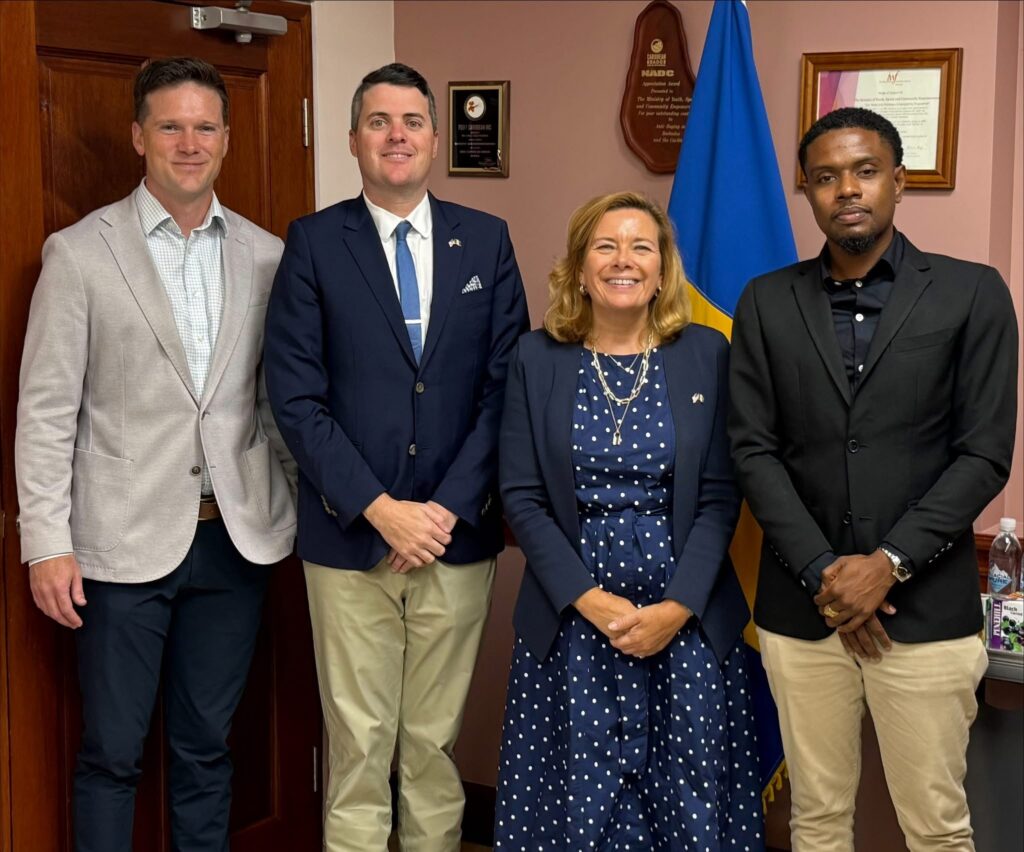
Roseau, Dominica – The Joint Programme on “Promoting a Human Security Approach to Disaster Displacement, Environmental Migration, and Disaster Risk Reduction in the Caribbean Region” is proud to announce the commencement of Phase 2 of its initiative. Building upon the success of Phase 1, that supported the development of resources to manage disaster displacement, this program aims to further integrate the human security perspective into environmental migration, and disaster risk management interventions across the Caribbean.
Phase 1 of the Joint Programme, titled “Integrating the Human Security Approach in Disaster Displacement and Environmental Migration Policies in the Eastern Caribbean,” made significant strides in enhancing guidance resources for managing disaster displacement and cross-border evacuation in the OECS region. Most OECS countries, in 2023 signed off on the new High-Level Ministerial Declaration for Migration Environment and Climate Change. This declaration reaffirms OECS Governments’ commitment to proactively address human mobility linked to climate related hazards, considering the human security approach.
Viola Pascal, Project Manager for the Joint Programme, expressed her enthusiasm for Phase 2, stating,
“It will focus on supporting greater buy-in and uptake from the stakeholders across the region. We will continue to promote an increase in awareness on human mobility and disaster linked to climate change in the region through the lens of the human security approach. By working with our new implementing partner, the United Nations Office for Disaster Risk Reduction, we have strengthened partnership for DRR. We have also added multi-hazard early warning system consideration to this initiative.”
Phase 2 of the Joint Programme aims to achieve two main outcomes:
Programme Management Officer at the United Nations office for Disaster Risk Reduction in the America’s (UNDRR), Jair Torres, emphasized the importance of this initiative, stating,
“The role of UNDRR, apart from ensuring a good understanding of disasters—whether natural, social or socio-natural in origin—is pivotal in this project. Our aim is to reduce insecurities and bolster resilience in Caribbean communities, businesses, and institutions. Our approach prioritizes people.”
The programme is being implemented by the International Organization for Migration (IOM) and the United Nations Office for Disaster Risk Reduction (UNDRR) in collaboration with the Caribbean Disaster Emergency Management Agency (CDEMA), the Organisation of Eastern Caribbean States (OECS) Commission and the Platform on Disaster Displacement (PDD) under the guidance of the Resident Coordinators Office for Barbados and the Eastern Caribbean. The joint programme is funded by the United Nations Trust Fund for Human Security
The beneficiary countries of Phase 2 include Anguilla, Antigua and Barbuda, Barbados, British Virgin Islands, Commonwealth of Dominica, Grenada, Jamaica, Montserrat, Saint Kitts and Nevis, Saint Lucia, Saint Vincent and the Grenadines, and Trinidad and Tobago.
Roseau, Dominica – The Joint Programme on “Promoting a Human Security Approach to Disaster Displacement, Environmental Migration, and Disaster Risk Reduction in the Caribbean Region” is proud to announce the commencement of Phase 2 of its initiative. Building upon the success of Phase 1, that supported the development of resources to manage disaster displacement, this program aims to further integrate the human security perspective into environmental migration, and disaster risk management interventions across the Caribbean.
Phase 1 of the Joint Programme, titled “Integrating the Human Security Approach in Disaster Displacement and Environmental Migration Policies in the Eastern Caribbean,” made significant strides in enhancing guidance resources for managing disaster displacement and cross-border evacuation in the OECS region. Most OECS countries, in 2023 signed off on the new High-Level Ministerial Declaration for Migration Environment and Climate Change. This declaration reaffirms OECS Governments’ commitment to proactively address human mobility linked to climate related hazards, considering the human security approach.
Viola Pascal, Project Manager for the Joint Programme, expressed her enthusiasm for Phase 2, stating,
“It will focus on supporting greater buy-in and uptake from the stakeholders across the region. We will continue to promote an increase in awareness on human mobility and disaster linked to climate change in the region through the lens of the human security approach. By working with our new implementing partner, the United Nations Office for Disaster Risk Reduction, we have strengthened partnership for DRR. We have also added multi-hazard early warning system consideration to this initiative.”
Phase 2 of the Joint Programme aims to achieve two main outcomes:
Programme Management Officer at the United Nations office for Disaster Risk Reduction in the America’s (UNDRR), Jair Torres, emphasized the importance of this initiative, stating,
“The role of UNDRR, apart from ensuring a good understanding of disasters—whether natural, social or socio-natural in origin—is pivotal in this project. Our aim is to reduce insecurities and bolster resilience in Caribbean communities, businesses, and institutions. Our approach prioritizes people.”
The programme is being implemented by the International Organization for Migration (IOM) and the United Nations Office for Disaster Risk Reduction (UNDRR) in collaboration with the Caribbean Disaster Emergency Management Agency (CDEMA), the Organisation of Eastern Caribbean States (OECS) Commission and the Platform on Disaster Displacement (PDD) under the guidance of the Resident Coordinators Office for Barbados and the Eastern Caribbean. The joint programme is funded by the United Nations Trust Fund for Human Security
The beneficiary countries of Phase 2 include Anguilla, Antigua and Barbuda, Barbados, British Virgin Islands, Commonwealth of Dominica, Grenada, Jamaica, Montserrat, Saint Kitts and Nevis, Saint Lucia, Saint Vincent and the Grenadines, and Trinidad and Tobago.

It is a long established fact that a reader will be distracted by the readable content of a page when looking at its layout. The point of using Lorem Ipsum is that it has a more-or-less normal distribution of letters, as opposed to using ‘Content here, content here’, making it look like readable English. Many desktop publishing packages and web page editors now use Lorem Ipsum as their default model text, and a search for ‘lorem ipsum’ will uncover many web sites still in their infancy.
The point of using Lorem Ipsum is that it has a more-or-less normal distribution of letters, as opposed to using ‘Content here, content here’, making
The point of using Lorem Ipsum is that it has a more-or-less normal distribution of letters, as opposed to using ‘Content here, content here’, making it look like readable English. Many desktop publishing packages and web page editors now use Lorem Ipsum as their default model text, and a search for ‘lorem ipsum’ will uncover many web sites still in their infancy.
We’re excited to introduce Emonew, Dominica’s fresh new source for general country news. From community updates to national stories, we’re here to keep you informed, connected, and up to date.
Copyright Emonews 2025